Anglican pastor Steven Wedgeworth at Davenant has written one of the most comprehensive yet accessible essays on the objections and pros/cons of Christians and Hallowe’en.
For your consideration:
“But I don’t really mean to sound like a grinch who might steal Halloween from everyone. Insofar as it can be a feast in the true sense of the word, then it can be good. Invite those you know into true fellowship. And even a little trivial fun is fine too, in its place. But it’s precisely here where we need to keep it in its place, not giving it more than its due and not letting it become a temptation to join in with the deeds of darkness.”
The Party Ship, HMCS Sunny Ways, left Montreal harbour for Ottawa on October 19, 2015, amid confetti and balloons, smiles all around, and a bold announcement that “Canada is back!” after 8 years of Canada being steered by the warship HMCS Cold and Competent.
Our Captain at the helm of the new party ship was a young, brash, and confident man, who promised that life aboard this ship was going to be far more fun, far more equal, and far more environmentally friendly. This was a different sort of ship. Unlike the warship, this party ship was said to be made of glass, that all those looking in would be able to see what the inner-workings of the ship looked like, and how utopian the whole endeavour was going to be.
It didn’t take too long, however, before the HMCS Sunny Ways began taking on water.
Slowly at first, but it started with an ‘inadvertent’ sideswipe to iceberg in the shape of a breast. Apologies all around, no harm, no foul. That same year, however, the Captain decided to accept an invitation to a Port-of-Call that was out-of-bounds. The hole in the boat became larger, and suddenly the glass sides of the ship appeared to be taking on an abundance of barnacles and sea-sludge.
The passengers on the ship didn’t seem to notice, for a time. The wine was still flowing, the caterer was still finding food, prices were still reasonable, the bilge pumps were managing, and the Captain was still as handsome as ever.
But then, something changed.
The ship kept hitting icebergs, bigger and sharper than the ones before it. The bilge pumps started to sputter. The dirty water started to gather, to fill up the ship. Not many noticed at first, except those closest to the bottom of the boat. Some passengers started inquiring as to “Who was steering this ship?” and “Why do we keep hitting icebergs?” The Captain became indignant at those who dared question his ability to Captain the ship, and called them nasty names like “racist, disgusting misogynists”, all the while his executive officer stood beside him, nodding in approval.
But the boat kept taking on more and more water. After 8 years of partying on HMCS Sunny Ways, people starting noticing the stench of the ship, and how un-transparent it was, and how the wine had stopped flowing, and no one could afford the caterer anymore, except of course, the Captain and the EXO. The cries of those in the lower reaches of the ship had become deafening, and could no longer be ignored by those in the penthouses.
The passengers were drowning, starving, and dying, and like the pounding heart in Poe’s short story, slogans and lies could no longer hide reality. Something was
seriously wrong.
You may feel like one of those who are drowning in the ‘goodness’ of our government. I have seen numerous social media stories of people who are at the end of their proverbial rope, not knowing how they can afford to live. Energy costs are through the roof, inflation has driven prices of everything sky-high. A single-income home is almost impossible in today’s Canada. Those that once supported our federal government have largely woken up to the reality that policies driven by ideology have crippled this nation, and will continue to beat it down for years to come.
While I find this unacceptable, this is not my major concern. My major concern is: How are you, as a Christian, dealing with the realities of our current time?
We can easily slip into the Sea of Despond, wanting badly for a change of government. But we must never accept the lie that governments can fix what ails us. Sin is what ails us, and to sin on a national level as Canada has invites discipline or punishment from the Lord of Lord’s and King of Kings.
Joseph de Maistre once said “Every nation gets the government it deserves.” And while we can all agree that every human government will fall short of God’s calling, the farther away a government moves from the wisdom and justice of God’s law, the worse off society will be. The last 8 years should prove this assertion, but because of our collective sin, we will learn nothing.
A nation can turn things around, but it must start with the church. The church must repent of her idolatry, her pragmatism, her whoring and wandering. The church must first seek God’s Kingdom and His righteousness (Matt. 6:33). Then, and only then, will a nation turn and hear and be saved.
Finally, as desperate as times can seem at the moment, we need to keep two things in mind.
First, God has graciously given us a body to lean on and rely on. It is called the church. Gal. 6:2 states, “Bear one another’s burdens, and so fulfill the law of Christ.” The church is meant to be a body that supports one another, in the good times and the bad. It is a body of believers who will pray for you, weep with you, celebrate with you, and assist you in your time of need. This is what we are called to do. If you don’t belong to a church that practices these things, you might want to rethink what church you are attending.
Second is the sovereignty of God. Proverbs 16:9 states “The heart of man plans his way, but the LORD establishes his steps.” Psa. 37:13 states “but the Lord laughs at the wicked, for he sees that his day is coming.” God is in control, even of the wicked men and women in power. They will either come to repentance, or they will perish with the wicked. God is just, and vengeance is His. No matter how down and out a Christian feels, a healthy spirit sings out to God, “Tho He slay me, I will worship Him.” (Job 13:15).
A helpful hymn for those that need it:
When peace, like a river, attendeth my way, When sorrows like sea billows roll; Whatever my lot, Thou has taught me to say, It is well, it is well, with my soul.
Refrain: It is well, with my soul, It is well, it is well, with my soul. Though Satan should buffet, though trials should come, Let this blest assurance control, That Christ has regarded my helpless estate, And hath shed His own blood for my soul. My sin, oh, the bliss of this glorious thought! My sin, not in part but the whole, Is nailed to the cross, and I bear it no more, Praise the Lord, praise the Lord, O my soul!
For me, be it Christ, be it Christ hence to live: If Jordan above me shall roll, No pang shall be mine, for in death as in life Thou wilt whisper Thy peace to my soul. But, Lord, ’tis for Thee, for Thy coming we wait, The sky, not the grave, is our goal; Oh, trump of the angel! Oh, voice of the Lord! Blessed hope, blessed rest of my soul! And Lord, haste the day when my faith shall be sight, The clouds be rolled back as a scroll; The trump shall resound, and the Lord shall descend, Even so, it is well with my soul.
I read somewhere recently that when one finds themselves in a culture war (which we currently are), that the one thing (among a few) that we should avoid at all costs is to look like opportunists.
I think we all know what an opportunist is, but in case 4-syllable words are slightly above your education level, let me explain. An opportunist is someone who uses current situations (usually bad, but not always) to advance an ideology or a sale. Here’s an example:
Person 1: My widowed grandmother just passed away. Person 2: Selling her car?
The reason why one wants to avoid appearing as an opportunist is largely because it is grossly insensitive. Speaking of insensitive: Wildfires have been raging in the Northwest Territories, threatening Yellowknife, and in British Columbia, threatening numerous towns, especially Kelowna. If you’ve been on social media, you can see videos of the devastation these fires have had on the respective populace. Homes have burnt to the ground, people have been evacuated and are now far away from their home. Yellowknife residents are in Edmonton.
We like to think Edmonton is in the Great White North. Look at a map: it’s almost the same distance from Edmonton to the Manitoba/Ontario border. It’s NOT close. In addition to the wildfires, floods are raging out east in Nova Scotia.
What can we do to help? Speaking about the fires and opportunists: Underneath pictures of fires and floods, I have seen a number of ‘journalist’ types and politicians that have decided that amid the devastation, NOW would be a good time to advance the climate cult agenda on their social media pages. And it’s not just a couple people, but is rampant. Shame on you. I pray that those reading your abhorrent tweets and posts (no matter what side of the climate debate they may be on) will see you for what you are, heartless opportunists. May you come to a knowledge of repentance, and by God’s grace, faith. Put your vitriol away for five minutes and pretend you care about these people.
As a first responder, I have seen up close and personal what natural disasters can do to people and their families, and their property. My immediate family was impacted by the floods in 2013. I went to Fort McMurray in 2016 to help with that disaster. I was in Waterton National Park in 2017 as the Kenow wildfire ripped through. The devastation caused by these disasters was immense. As the communities of Kelowna and Yellowknife are now dealing with wildfires, my heart goes out to them.
The Apostle Paul, in his letter to the Romans, gives us, as Christians, a template of what it means or what it should look like to walk as Christians. It reads “9 Let love be genuine. Abhor what is evil; hold fast to what is good. 10 Love one another with brotherly affection. Outdo one another in showing honor. 11 Do not be slothful in zeal, be fervent in spirit, [g] serve the Lord. 12 Rejoice in hope, be patient in tribulation, be constant in prayer. 13 Contribute to the needs of the saints and seek to show hospitality. 14 Bless those who persecute you; bless and do not curse them. 15 Rejoice with those who rejoice, weep with those who weep. 16 Live in harmony with one another. Do not be haughty, but associate with the lowly. [h] Never be wise in your own sight. 17 Repay no one evil for evil, but give thought to do what is honorable in the sight of all. 18 If possible, so far as it depends on you, live peaceably with all. 19 Beloved, never avenge yourselves, but leave it [i] to the wrath of God, for it is written, “Vengeance is mine, I will repay, says the Lord.” 20 To the contrary, “if your enemy is hungry, feed him; if he is thirsty, give him something to drink; for by so doing you will heap burning coals on his head.” 21 Do not be overcome by evil, but overcome evil with good.”
Christians are to have a certain decorum about them. When we take advantage during someone’s difficult situation, we are most definitely not displaying love, honour, patience, or kindness. We most assuredly are not contributing to their needs, but quite the opposite. Is this what Jesus did? Not at all.
To those affected by these disasters, my prayers and tears are with you.
This past week, like most of you who don’t live under a rock may have discovered, a country artist named (Chris) Oliver Anthony wrote and sang a song called “Rich Men North of Richmond”, a clear reference to Washington, D.C.
This poor former factory worker is a resident of Farmville, VA (one of the poorest areas of all Virginia). The song is going ‘viral’ due to the rawness of the message and the spirit in which Mr. Anthony sings it. It is real. It is emotional. It is speaking to people. You can watch it below. It has a bit of profanity.
Recently I have been thinking through the Greek concept of koinonia, community, as is meant in Scripture. What is it that makes ‘community’ in the truest sense? What follows, I have most definitely NOT come up with myself, but I cannot remember where I heard it. Regardless, it is something that strikes home with me.
There are two parts to community. There are the objective standards or patterns of thought that create the skeleton of any group; what give it form. Then there are the subjective, the emotions (if you will), that put life and blood and heart into the objective form. Both of these things are needed and necessary in order to have a true community. If you have just the objective form, you have cold rationalism. Without the objective, you have warm, formless goo. Neither of these is good. Neither of these, alone, are enough to form koinonia.
Churches can often fall into one of these two categories. Generally speaking, the charismatic types fall into the subjective warm goo characteristic, while the reformed types (including us Presbyterians) can fall into the cold, heartless category. One is warm and welcoming, but has very little form or substance to it, while the other has all the form, but has the warmth of a skeleton prop in a biology classroom.
What does this have to do with Oliver Anthony?
It appears that (Chris) Oliver has had a come to Jesus moment. In his latest concert, he opened with Psalm 37. If you follow any of his videos, it looks like he came from a place of despair, and came through it to find Jesus. He wrote this song in order to express what he and many others feel about our current society. It struck a cord and is getting airtime. So how does one reconcile the use of profanity in the song, sung by a man of faith?
First, when we come to Christ, we don’t become fully sanctified (glorified) immediately. In fact, none of us ever reach sinlessness this side of heaven. Jesus accepts us where we are, and then, through sanctification, makes us more like himself. This takes a lifetime.
Second, the Bible uses offensive language. Paul, in his letter to the Philippians, uses the Greek word skubalon, a clear reference to ‘dung.’ The argument has been put forward that the term, in Paul’s time, was much stronger; similar to the one used by Oliver in his song. Paul only used it once, another indication that it was a strong word, used specifically for making a strong point.
Shortly after the song was released, social media types started commenting on it. One of the comments found on X (formerly Twitter) was from a popular pastor who slammed the song for it’s use of profanity and how he didn’t think it ought to be a song that Christians should cozy up to or promote. The general comments following his post were a mixed bag, but there were many in agreement with him. Hello, skeleton.
When the church cannot weep with those who weep or rejoice with those who rejoice, we have lost touch with our goal. Our goal is to “First seek the Kingdom of God and his righteousness.” (Matt. 6:33). Here we have a man (Christian or not), crying out for justice, crying out for righteousness, in a time when the leaders of the Western world have become tyrants and oppressors.
How is it that Christians can sit back and criticize the message of a man who articulates what most of us are thinking and feeling, and expect a lost and dying world to see us as a light shining on a hill? Where is the compassion? Where is the humanity? How can we not say “Amen” to a song that we know to be true, just because he uses the term “shit” in it?
To the church: If you want people to see Jesus and come to know Him, then you, His ambassadors, need to have a heart for humanity. See people; truly SEE them, and offer them the only hope any of us have, Jesus Christ and Him crucified. We must demonstrate that we understand the weightier matters of the law: justice and mercy and faith (Matt. 23:23).
If we hear a song like this, and all we hear are the possible corruptible words, we’re really missing the point.
To act otherwise is to play the Pharisee, and we know what terms Jesus used for them.
With thanks to the Lord for his abundant provision and to the generous church leadership at All Saints for cheerfully sharing their space with us, we’re excited to announce our NEW Sunday service location and time, beginning today:
This move is the answer to many prayers as we’ve navigated not one, not two, but THREE separate locations since we began meeting under lockdown, outgrowing two homes and now a karate dojo.
Between our growing church families and congregation, plus needing extra room for new visitors, we thank God for his perfect timing at providing this welcoming, gorgeous, and spacious new gathering spot just up the hill.
Please join us in saying a very special thanks to both Adam and Dallas for their hospitality in opening up Ippon Dojo to our little church family indefinitely (especially when it would’ve been easier and less intrusive not to!) since our public launch just under a year ago on March 13th, 2022. From the bottom of our hearts to you and your families, thank you for your time, generosity, service, and example.
Thank you also to our weekly setup/teardown crew helping with tables, chairs, bins, errands, and cleanup. You are seen and appreciated! Thanks for your faithful service in keeping things running smoothly; we hope you greatly enjoy sitting in a pew you don’t have to assemble yourself first 😅 and enjoy the amenities All Saints has to offer.
In short, we can’t wait to welcome you in to our new Sunday gathering home this afternoon and make memories in our new space!
Socrates in the City has resumed filming after Covid to host Christian author and speaker Os Guinness and discuss the big picture questions we all seem to be asking, as we recover not only from the pandemic but seek to address the last several years in the West.
In case you’re not familiar, Mr. Guinness (yes, of *those* Dublin Guinnesses) was born and raised by his medical missionary parents under the brutal “red terror” revolution of Mao’s Communist China in 1949, living through, at the age of just seven, both the civil war and famine which murdered ~5 million people in just 3 months, including 900,000 of its own people in a deliberate flood.
Mercifully, he was sent away to England along with other foreigners in 1951, receiving his undergraduate degree at the University of London, then his D.Phil in the social sciences from Oriel College, Oxford. In his twenties he also spent some time at L’Abri learning from Francis Schaeffer.
Mr. Guinness credits his family’s experience in China with opening his eyes to the horrors of Marxism and centralized government planning, discussing how he came to care about the topics of his books, and then the conversation moves on to the importance of freedom.
From 19:57:
“St. Augustine says, ‘how do you understand a nation?’ The trick is to look at what it loves supremely. Not the population, not the strength of the army, not the GDP, no. They’re all important but not all-important. To understand a nation, you look at what it loves supremely. What does America love supremely? No question: freedom.
Now, American freedom is unique. As people say that the book ends of history are authoritarianism – take China: all order, no freedom – and the other book end, anarchy: all freedom, no order – and the genius of America is an ordered freedom. Freedom within the Constitution. Now where did that come from?It did not come from, with due respects, Greece.
[He winks; Metaxas feigns offense: “If this weren’t my event, I’d walk out right now… I can’t believe I’ve called you ‘friend’ all these years… No, listen, of course I learned this from you and I know this is true and it’s actually very important that you explain it because so many people are not aware of it…’]
Democracy came from Greece. Even currently, everyone’s talking about saving democracy. The Framers [America’s Founding Fathers] were very wary of democracy, for reasons that the Greeks showed. Ends in mob rule.
America was built as a republic. It didn’t just mean you don’t have a king. In the 17th century, following the Reformation in the 16th, everyone was fascinated with the discovery of what they called the Hebrew Republic.Now that’s what you find in Exodus and Deuteronomy. So, the Constitution comes from covenant. The consent of the governed comes from Exodus. The separation of powers is in Exodus. America was basically founded as a republic based on the Hebrew republic, with important differences. And people have forgotten that almost entirely.
– Os Guiness
Watch the rest below, and consider: what shall we say that our own country, Canada, loves supremely? Safety? Feminism? Identity? And what current ideologies or policies have we endorsed that we ought to resist?
PS You may pick up a copy of Guinness’s book (and larger explanation of his references) here.
The passages in Deuteronomy he alludes to can be found here. And as for Exodus, while there are few prescriptive to all believers, the parallel concepts between the Bible and the US Constitution are documented in this article by the National Center for Constitutional Studies.
As with all things, read with discernment, weighing holy writ by holy writ.
As we prepare for another year of prayer, fasting, worship, and keeping a watchful eye on the news, let us dwell for a moment on the faithful saints who’ve gone before us.
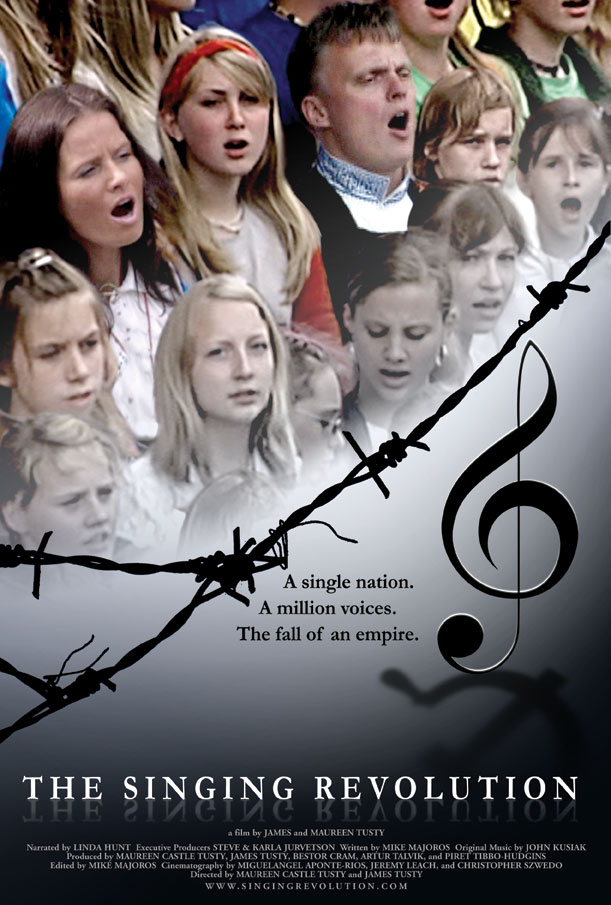
The Singing Revolution shares how, between 1987 and 1991, hundreds of thousands of Estonians gathered publicly to sing forbidden patriotic songs and share protest speeches, risking their lives to proclaim their desire for independence.
While violence and bloodshed was the unfortunate end result in other occupied nations of the USSR, the revolutionary songs of the Estonians anchored their struggle for freedom, which was ultimately accomplished without the loss of a single life.
In an episode of Life and Books and Everything last May, Kevin DeYoung read from the article he wrote for WORLD Opinions on seven principles for cultivating a Christian posture toward the world.
I found these last two points particularly helpful to think through, especially as we navigate the year ahead:
#6 Approach cultural and ethical polarities on a case by case basis
Some issues that divide Christians are adiaphora: matters left up to our consciences, and guided by the goal of mutual edification. But sometimes there is no middle ground and no third way. When Jesus was asked about divorce, he sided with the more restrictive Shammai school over the Hillel school of interpretation. When asked about the resurrection, Jesus defended the resurrection in agreement with the Pharisees over against the Sadducees. In one sense, Jesus transcended those debates. He was, after all, calling people to himself, but he didn’t act like both sides of the controversy were equally right and equally wrong, or that the best answer was some of column A plus some of column B.
#7 When people give you a hearing don’t lead with a hard edge and don’t leave the hard stuff out
Think of Paul in the book of Acts. He begins his speech to the men of Athens with commendation and common ground, but he goes on to correct their worship call them to repent and proclaim the hard-to-believe resurrection. Likewise, Paul speaks respectfully to Felix Festus and Agrippa, but he does not avoid the doctrines and ethical demands he knew they would find disagreeable. In this was a model for us as we face an increasingly hostile world. Courtesy wherever possible, clarity at all costs.
A lot of us are wondering lately, where is this all going? Who is steering the ship? Who gets to say what happens next, or what other restrictions get put in place?
Of course, as Christians, our ultimate allegiance is to the Lord himself, but it’s helpful to know and be able to anticipate what other voices might try and demand our attention, respect, and allegiance as they attempt to predict the future.
As you may or not be aware, in 2020 at the start of C0vid, World Economic Forum founder Klaus Schwab and Monthly Barometer author Thierry Malleret produced the following document which “considers its far-reaching and dramatic implications on tomorrow’s world.”
(NOTE: This is NOT an endorsement.)
The book’s ostensible main objective, in the authors’ own words, is: to help understand what’s coming in a multitude of domains. Published in July 2020, in the midst of the crisis and when further waves of infection may still arise, it is a hybrid between a contemporary essay and an academic snapshot of a crucial moment in history. It includes theory and practical examples but is chiefly explanatory, containing many conjectures and ideas about what the post-pandemic world might, and perhaps should, look like.(highlight added)
It is an all-encompassing treatise and worldview, with sections devoted to economics, society, geopolitics, the environment, technology, industry, finally culminating in the individual, including “redefining our humanness” and whether we’re proverbial devils or angels (yes, it really uses that language) navigating our primal fear of death.
While reading, ask yourself (for starters): what is the set of assumptions or facts relied upon? Do the conclusions follow from the premises? How might definitions be altered to fit a narrative? And how do these founders borrow language from Christianity that might appeal and persuade people otherwise?
Read with a giant grain of salt and discernment here, if you haven’t already.
🎁 Looking for the perfect gift to give your loved ones? 🎁
Imagine if you could wrap and present them with an entire box of a year’s worth of answered – and perhaps mercifully unanswered? – prayers.
While our material focus can sometimes be overdrawn to stockings, mistletoe, decorations, The Perfect Gift List, and impressing others, let’s not forget the sweet gifts of time in prayer and communion with the Lord in this bustling season.
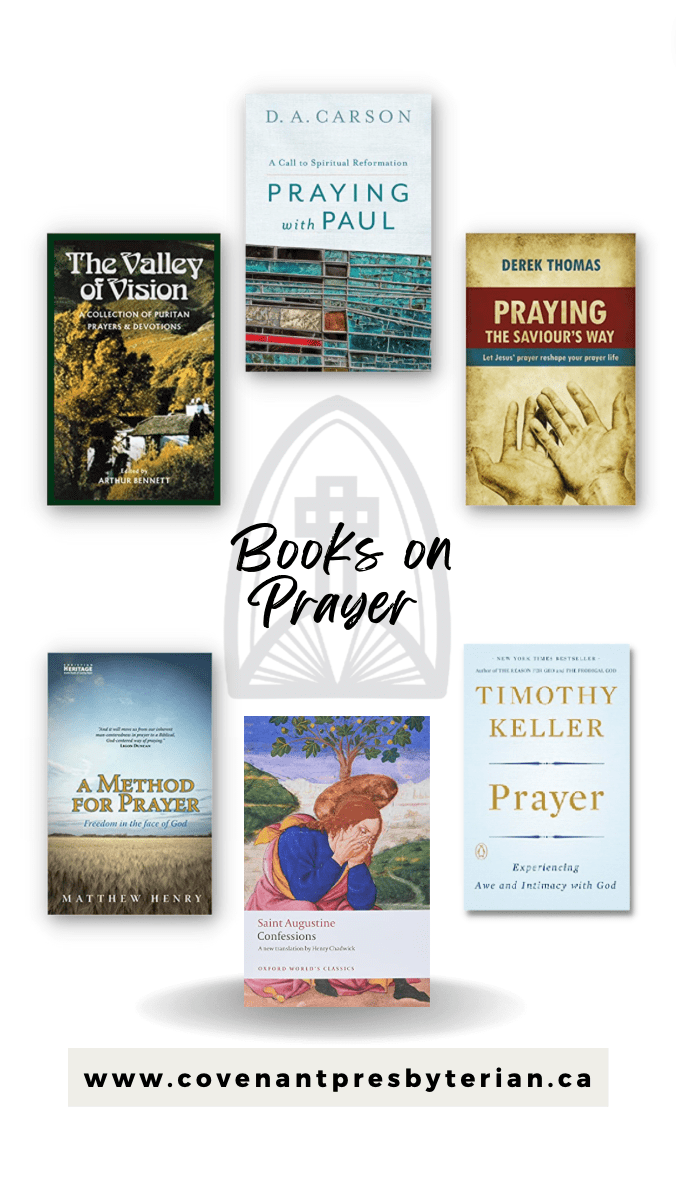
A prayer journal accompanied by one of the below prompts on how, when, or why to pray might just be the gift our weary souls need this Christmas:
—
The Valley of Vision – This book has been prepared not to ‘supply’ prayers but to prompt and encourage the Christian as he treads the path on which others have gone before. In it you will see dozens and dozens of handwritten Puritan prayers in poetic format. (Sometimes the best way to learn to pray is simply by observing and listening to the prayers of others.)
A Method for Prayer – Matthew Henry – In this book, you will discover the methods Jesus taught, look at styles of prayer, and see helpful examples.
Confessions – St. Augustine – Augustine of Hippo writes his own prayers, struggles, wrestling with Scripture, and his struggle against the conquering and redemption of his sexual nature in this intensely personal journal archive of his prayer life.
Prayer – Timothy Keller – Biblical guidance as well as specific prayers for certain situations, such as dealing with grief, loss, love, and forgiveness.
And as a reminder, local Calgary and area friends, most of these can be found both new and second-hand at our Christian bookstore, Better Books and Bibles. Perfect for Christmas gifts!









 Covenant Presbyterian Church