
Streaming now on YouTube & Facebook (Meta). This original video is presented to you courtesy of Covenant Presbyterian Church. Special thanks to the members of our congregation who made it possible.
Biblical Metaphors & Breadmaking
Author and bread-maker Abigail Dodds talks about what something as simple as the mixture of flour, water, and yeast can teach us about God, the Bible, and what it really means to be satisfied by our Savior.
Excerpt:
Abigail Dodds
One of my very favorite Bible passages is Colossians 3:1–4. It says, “If then you have been raised with Christ, seek the things that are above, where Christ is, seated at the right hand of God. Set your minds on things that are above, not on things that are on earth.” That is still one of my favorite passages, but one of the ways that I misapplied that passage was to think that earthly things were earthy things, and those aren’t exactly the same thing. If you keep reading past verse four, which was always my favorite part that I would memorize and then I would be done, it defines what earthly things are. It’s things like sexual immorality. It lists a whole bunch of things. Those are the earthly things that we are not to be fixing our minds on and that we are not to be participating in. But earthy things—God made the world. “The earth is the Lord’s and the fullness thereof” (Ps. 24:1). Those things are actually pointers to God. It’s like Lewis says: there are sunbeams that point us in the direction of God if we can trace along them all the way up and back to the sun, we see more of who God is. Where that can go astray is that if you do not know God’s word, if you do not know the way he chooses to use the earth as metaphor for himself—for example, things of the earth like bread as metaphor for himself—you’ll miss it. You’ll go really weird, and people do.
Matt Tully
What’s an example of that? What do you mean by that?
For instance, there are a lot of real nature lovers—people who absolutely love nature and value the earth or the environment—but who cannot find God in it. They cannot find the true and living God through merely accessing the world because they cannot understand the meaning without both the revelation of the world and the word.
You’ve got to have the revelation of Jesus Christ through the Scriptures—the written word—in order to rightly understand all the metaphors in the world—like bread and a vineyard. That’s where knowledge of God’s word is absolutely essential if you want to start poking your head around in the metaphors of the world that are going to point you to Christ.
Abigail Dodds
(emphasis added)
Under the Influence

BlackRock is a name you may not know.
If you have read Rod Dreher’s Live Not By Lies, though, which some of us are doing in our spare time, you’ll know that many large corporations have embraced social progressivism or woke capitalism as their mission and values set (pp. 74-75).
You may then be interested to hear how the world’s largest asset manager, BlackRock, enforces its so-called progressive views and priorities on the companies it holds. Michael O’Fallon at Sovereign Nations explores this mix of pressure, power, and influence from BlackRock below.
Brene Brown on Empathy | Doug Wilson

“But why on earth do you need to make sympathy into a bad thing?” Doug Wilson breaks down that Fox and Bear Brené Brown video on empathy ahead of the holidays when we’re perhaps most tempted to take on the emotions or idols of our family members.
The goal is not to just win the argument, but to continuously love our people better and in a more Christlike way. What happens, for example, when a crisis is passed and we have to answer for what happened with one another (let alone before God)? Watch below:
Mandatorians

In the spirit of No Quarter November, Douglas Wilson has thrown a final bone to his readers on Blog & Mablog, responding this time to Relevant Magazine’s questioning why some Christians simply won’t get v@ccin@t3d. The quotes are many, but here are some of the more memorable moments:
You tell me that because I am no scientist, I don’t know which side has the information and which has the misinformation. No, but I know which side won’t let the other side talk. I know which side is appealing to arguments and which side is appealing to the form of reasoning known as “shut up, they explained.” I do know that.
and later:
The old “loving your neighbor” ploy, eh? So let us work with that a little bit, shall we? If you disagree with unaccountable bureaucrats about the best treatment options for someone whose life you genuinely value, you are accused of somehow not loving your neighbor. So let the apostle define love for us. “Love is patient, love is kind. Love seeketh not its own, and agreeth at all times with federal bureaucracies.”
Douglas Wilson
Say you are a trained EMT, and you come across a bad traffic accident. You are the first on the scene, and another fellow joins you right afterwards. He was in the car behind you. He starts to move the driver of the car, who was thrown out of his car, and you tell him not to do that. It looks like his neck is broken, and it will need to be immobilized before he can be safely moved. With me so far? But suppose the other guy who is helping out—a really nice guy, but one who works in accounting at a big hardware store—tells the EMT that he really needs to “lay aside his opinions” and “think of others first.”
The EMT thinks, but does not say, that this is no time for an argument about words. But if it were, he could point out, mildly the first time, that his opinion, trained and everything, was actually an opinion about how best to think of other first. And you don’t think of others first by breaking their necks, however well-intentioned. You don’t lay aside your opinions about how best to love others, in order to love others.
In other words, before we start impugning the motives of others in the debate (loving your neighbor, egad), we need to assume that everyone’s motives are fine and settle the question of fact. What in fact is the best thing to do?
But what Relevant magazine means to say is this. Because they are not going to lay aside their opinion on what it means to love others, this requires you to lay aside your opinion about what it means to love others, and you need to do this in order that you might love others.
If you have trouble following that, perhaps it is because you have a heart of stone.
Read the full article, titled the Mandatorians, here.
Is the New Testament Reliable? (5 mn)
The words “religious belief” are often taken to mean something laughable, untrue, or relegated to the realm of grandmas reading nursery rhymes to their grandchildren. Certainly not for the workplace, and definitely not for politics.
The New Testament has been passed down for almost 1,700 years and been translated into 250 languages. But the question is, is it reliable? Where did it come from? How can I trust its translation? Why are there so many different translations? Is the Bible we have now identical to its original writing?
Come listen as Dr. Daniel Wallace explains how we can have confidence in the Scriptures’ reliability today.
How to Care for Someone Battling Anxiety and Depression (TGC)

The holiday season and winter can be lonely and bring to light our insecurities, failings, despair, and disappointments, especially with our family and with ourselves.
What’s the best way a gospel-preaching church can help its members who struggle with depression and anxiety?
Pastor and author Paul Tripp sat down with David Powlison, TGC Council member and executive director of the Christian Counseling and Educational Foundation (CCEF), to answer this question. They agreed that the two key qualities most needed when ministering to a Christian suffering from anxiety or depression are humility and patience. We should not focus solely on “fixing” people, but on helping them draw near to God as long as the struggle continues.
Tripp counsels, “I want the person to remember that God is near, that he is present, that his grace reaches to the depth of those struggles—rather than if you do this, this, and this, you can become unanxious.”
Want to Learn to Be a Lifelong Learner – for Free?

“[The purpose of this series is to] teach you to be the kind of person who’s always learning. Somebody who’s always curious and capable of teaching yourself any new subject.”
The Commons at CanonPress is a new initiative focussed on walking through a number of texts with New Saint Andrews’ instructors central to their curriculum. While it cannot replicate an NSA education in its entirety, it will hopefully set you up with the same goal: to be someone continually interested in learning. Launch date coming soon!
https://canonpress.com/thecommons/
The Star of Bethlehem
What was the star that appeared in the sky more than 2,000 years ago and directed the Magi to undertake a massive journey of faith?
The Star of Bethlehem is a comprehensive investigation of the story found in the Biblical Gospel of Matthew about the star that guided the Magi to the Christ child, combining the words of Roman and Jewish historians, the visions of ancient prophets, and a modern study of celestial objects.
To purchase the DVD, read more about Rick Larson’s other projects, or take a deep dive on the research undergirding the documentary, visit https://bethlehemstar.com
For another perspective that corroborates many of the conclusions drawn from this documentary, Michael Heiser has some insights from the Qumran community as well, though a slightly different timeline.
FREE Jesus Storybook Bible Advent Kit
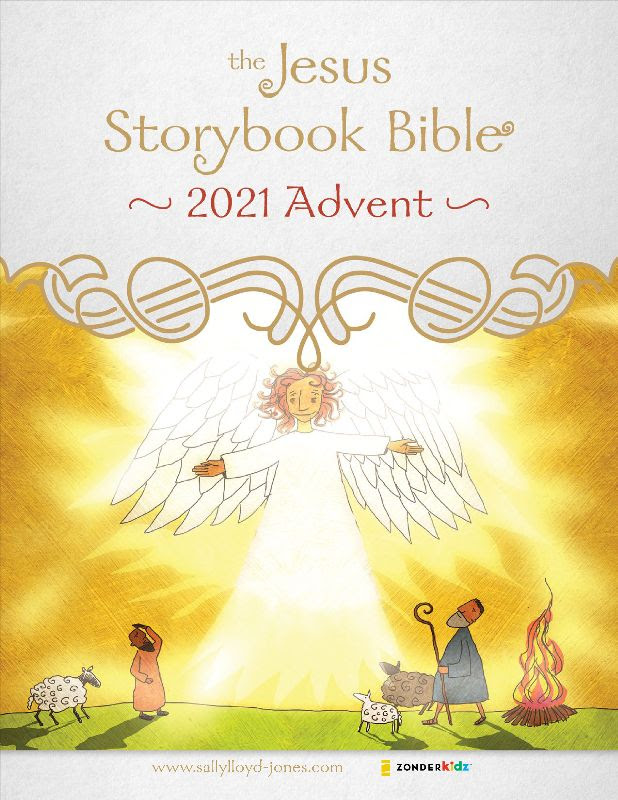

Courtesy of Sally Lloyd-Jones, here is your free Jesus Storybook Bible Advent Kit for our littles, including:
- 24 printable Christmas ornaments (art by Jago)
- Reading plan for each day of December
- Christmas Soundtrack
- Coloring pages from The Jesus Storybook Bible Coloring Book
- Printable memory cards
- New bonus ornament from Song of the Stars
- Even more surprises
Follow along with your kids and enjoy every day of Advent season remembering Christ’s birth 2,000 years ago, finding peace and comfort in the unfolding kingdom of God, and anticipating Christ’s coming in the age to come.
Thanks to FaithGateway for hosting the Advent Kit. This link will bring to you their site to download.
PS Slightly bigger kiddos may also enjoy the more detailed Big Picture Story Bible by David Helm.
 Covenant Presbyterian Church